The Future of Connected Vehicles and What It Means for Your Business

James Whitfield
28 April 2026
The Future of Connected Vehicles and What It Means for Your Business
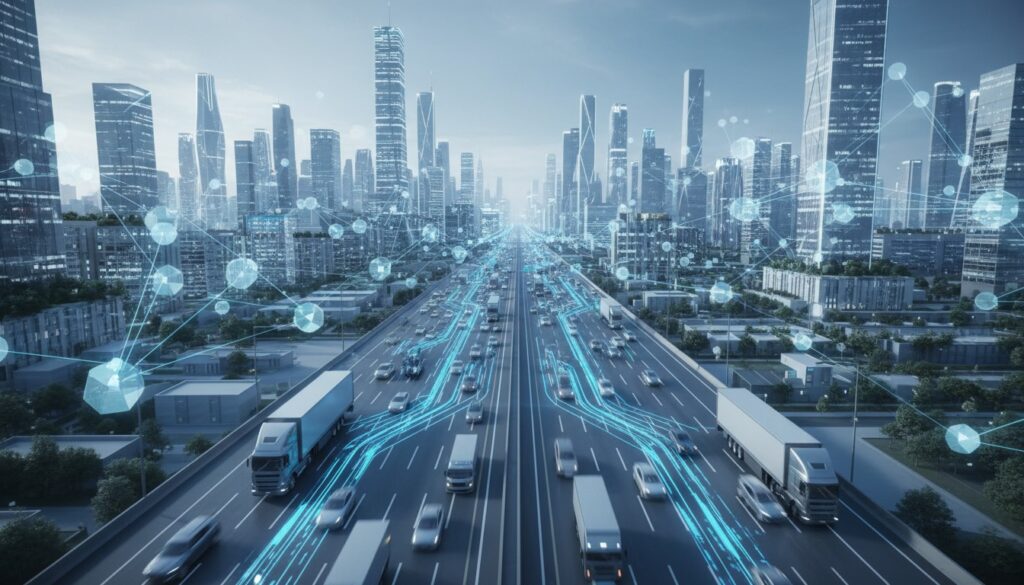
The automotive and transportation industries are undergoing a seismic transformation. Connected vehicle technology — once the stuff of science fiction — is now a commercial reality that is reshaping how fleets operate, how goods are delivered, and how businesses make strategic decisions. From vehicle-to-everything (V2X) communication to predictive maintenance powered by IoT sensors, the connected vehicle ecosystem is expanding at a breathtaking pace.
If your business relies on transportation, logistics, or fleet management in any capacity, the question is no longer whether connected vehicles will impact your operations — it’s how soon and how profoundly. In this post, we’ll explore the emerging trends that will define the next decade of transportation and offer actionable insights on how forward-thinking businesses can prepare today.
What Are Connected Vehicles, Exactly?
Before diving into the future, let’s establish a clear definition. A connected vehicle is any vehicle equipped with internet connectivity and, in most cases, a wireless local area network. This allows the vehicle to share data with other devices — both inside and outside the vehicle — including other cars, infrastructure, cloud platforms, and mobile devices.
Connected vehicles typically leverage a combination of technologies:
- Telematics systems that track location, speed, fuel consumption, and driver behavior
- IoT sensors embedded throughout the vehicle to monitor engine health, tire pressure, brake wear, and more
- V2X communication protocols that enable real-time data exchange with traffic signals, road infrastructure, pedestrians, and other vehicles
- Over-the-air (OTA) software updates that allow manufacturers and fleet managers to push firmware and feature updates remotely
- Edge computing modules that process data locally for time-sensitive decisions like collision avoidance
- V2V (Vehicle-to-Vehicle): Cars communicate with each other to share speed, position, and heading data, enabling cooperative driving and collision avoidance.
- V2I (Vehicle-to-Infrastructure): Vehicles interact with traffic lights, road signs, toll booths, and parking systems to optimize traffic flow.
- V2P (Vehicle-to-Pedestrian): Sensors and communication protocols detect pedestrians and cyclists, enhancing urban safety.
- V2N (Vehicle-to-Network): Vehicles connect to cloud-based platforms for navigation, entertainment, and fleet management services.
- Audit your current fleet technology to identify vehicles that support or can be retrofitted with V2X-compatible hardware.
- Partner with telematics providers who are investing in V2X integration.
- Engage with local transportation authorities to understand upcoming smart infrastructure projects in your operating regions.
- Reduced downtime: Vehicles are serviced before failures occur, keeping your fleet on the road.
- Lower maintenance costs: You replace parts based on actual condition rather than arbitrary schedules, reducing unnecessary part replacements by up to 30%.
- Extended vehicle lifespan: Proactive care means less cumulative wear and tear.
- Improved safety: Catching a failing brake system or worn tire before it causes an accident protects your drivers, your cargo, and your liability exposure.
- Invest in IoT-enabled fleet management platforms such as Samsara, Geotab, or Fleetio that offer predictive analytics dashboards.
- Start with high-value, high-usage vehicles first to maximize ROI.
- Train your maintenance teams to interpret and act on predictive alerts rather than relying solely on traditional inspection checklists.
- Route optimization: Analyze historical and real-time data to identify the fastest, most fuel-efficient routes for your fleet.
- Driver performance coaching: Use behavioral data to identify risky driving habits and implement targeted training programs that reduce accidents and insurance premiums.
- Customer experience enhancement: For businesses in ride-sharing, delivery, or passenger transport, connected vehicle data enables more accurate ETAs, smoother rides, and personalized services.
- Insurance optimization: Usage-based insurance (UBI) programs reward safe, efficient driving with lower premiums — and connected vehicle data makes this possible.
- Ensure compliance with GDPR, CCPA, and other relevant data privacy regulations.
- Implement robust cybersecurity measures to protect vehicle data from breaches.
- Be transparent with drivers and employees about what data is collected and how it’s used.
- Develop a clear data governance policy that defines data ownership, retention, and sharing protocols.
- Adaptive cruise control and lane-keeping assist reduce driver fatigue on long-haul routes.
- Automated platooning allows trucks to travel in tight formations, reducing aerodynamic drag and fuel consumption by up to 10%.
- Autonomous yard operations enable trucks to navigate distribution centers and warehouses without human intervention.
- Last-mile delivery robots and drones are being piloted by companies like Amazon, FedEx, and Nuro.
- Invest in driver-assist technology for your current fleet to improve safety and efficiency today.
- Redesign your logistics workflows to accommodate hybrid human-autonomous operations.
- Upskill your workforce — drivers will increasingly become fleet technology operators and supervisors rather than just vehicle operators.
- Monitor regulatory developments in your operating jurisdictions, as autonomous vehicle laws are evolving rapidly.
- Smart charging management: Connected platforms can schedule charging during off-peak hours to minimize electricity costs, and route vehicles to available charging stations automatically.
- Battery health monitoring: IoT sensors track battery degradation in real time, enabling predictive maintenance for the most expensive component in any EV.
- Energy-as-a-service models: Some fleet operators are exploring vehicle-to-grid (V2G) technology, where parked fleet EVs feed energy back into the grid during peak demand periods — creating a new revenue stream.
- Carbon tracking and reporting: Connected EV fleets make it easy to measure and report your carbon footprint reductions, supporting ESG goals and regulatory compliance.
- Building a technology roadmap: They’re mapping out a 3-5 year plan for fleet technology adoption, including connected vehicle hardware, software platforms, and infrastructure investments.
- Investing in talent: They’re hiring or training data analysts, fleet technology managers, and cybersecurity specialists who can manage connected vehicle ecosystems.
- Choosing interoperable platforms: They’re avoiding vendor lock-in by selecting fleet management solutions with open architectures and robust API ecosystems.
- Piloting before scaling: They’re running small-scale pilots with connected vehicle technology to measure ROI and refine processes before fleet-wide deployment.
- Collaborating across the ecosystem: They’re building relationships with OEMs, telematics providers, smart city initiatives, and industry consortiums to stay ahead of the curve.
“By 2030, an estimated 96% of new vehicles shipped globally will have built-in connectivity.” — McKinsey & Company
This isn’t a niche technology. It’s rapidly becoming the standard, and businesses that fail to adapt risk falling behind competitors who embrace it.
Trend 1: Vehicle-to-Everything (V2X) Communication Goes Mainstream
One of the most transformative developments in connected vehicle technology is V2X communication. This umbrella term encompasses several subcategories:
What This Means for Your Business
For fleet operators, V2X communication translates into dramatic improvements in safety, efficiency, and cost savings. Imagine a delivery fleet where every truck automatically adjusts its speed based on real-time traffic signal data, reducing idle time and fuel consumption by 15-20%. Or consider a construction company whose heavy equipment communicates with on-site infrastructure to prevent accidents in real time.
Actionable steps you can take today:
Trend 2: Predictive Maintenance Powered by IoT and AI
Traditional vehicle maintenance follows a reactive or scheduled model — you either fix something when it breaks or service it at predetermined intervals. Both approaches are inherently wasteful. Reactive maintenance leads to costly downtime and emergency repairs, while scheduled maintenance often results in servicing components that still have plenty of life left.
Predictive maintenance changes the game entirely. By harnessing data from dozens of IoT sensors embedded throughout a vehicle — monitoring everything from engine temperature and oil viscosity to transmission vibration patterns — AI algorithms can predict with remarkable accuracy when a component is likely to fail.
The Business Impact Is Enormous
A study by Deloitte found that predictive maintenance can reduce fleet maintenance costs by 25% and decrease breakdowns by 70%.
How to Get Started
Trend 3: Data Monetization and the Connected Vehicle Ecosystem
Connected vehicles generate an astonishing volume of data — an estimated 25 gigabytes per hour of driving, according to Intel. This data encompasses location, driving patterns, route efficiency, environmental conditions, vehicle health metrics, and much more.
For businesses, this data is a goldmine — but only if you know how to use it.
Opportunities for Data-Driven Decision Making
Privacy and Compliance Considerations
With great data comes great responsibility. As your business collects and processes vehicle and driver data, you must navigate a complex regulatory landscape:
Trend 4: Autonomous and Semi-Autonomous Fleet Operations
While fully autonomous vehicles (Level 5) are still years away from widespread commercial deployment, semi-autonomous features (Levels 2-4) are already making a significant impact on fleet operations:
Preparing Your Business for Autonomy
You don’t need to wait for fully self-driving trucks to benefit from autonomous technology. Here’s how to prepare:
Trend 5: Electrification Meets Connectivity
The convergence of electric vehicles (EVs) and connected technology is creating entirely new operational paradigms for fleet managers. Connected EVs offer unique advantages:
Pro tip: When evaluating EV fleet solutions, prioritize vehicles and platforms with open APIs that integrate seamlessly with your existing fleet management software.
How Forward-Thinking Businesses Are Preparing Today
The businesses that will thrive in the connected vehicle era aren’t waiting for the technology to mature — they’re laying the groundwork now. Here’s what the leaders are doing:
Conclusion
The future of connected vehicles isn’t a distant horizon — it’s arriving now, in incremental but accelerating waves. V2X communication, predictive maintenance, data-driven decision making, semi-autonomous operations, and electrification are not isolated trends; they’re interconnected forces that are collectively reshaping the transportation landscape.
For businesses, the implications are profound. Those who embrace connected vehicle technology will enjoy lower operating costs, improved safety, greater efficiency, and competitive advantages that compound over time. Those who delay risk being outpaced by more agile competitors who are already harnessing the power of connected data.
The key takeaway? Start now, start small, and scale strategically. You don’t need to overhaul your entire fleet overnight. But you do need a plan, a willingness to experiment, and a commitment to building the digital infrastructure that will support the connected vehicles of tomorrow.
Ready to Future-Proof Your Fleet?
The connected vehicle revolution is here, and the window to gain a competitive advantage is open. Subscribe to our newsletter for weekly insights on fleet technology, connected vehicle trends, and actionable strategies for transportation leaders. Have questions about how connected vehicle technology applies to your specific business? Drop a comment below or reach out to our team — we’d love to help you navigate the road ahead.
Written by David Miller | Industry Trends